
Why Some Chicago Blocks Hold Their Value Better
Walk down two streets in the same Chicago neighborhood and you might notice something curious: similar homes, just a block or two apart, can have very different price histories. One block seems bulletproof in every market cycle, while another struggles when conditions shift. This isn't random. Certain hyper-local signals can quietly support property values over time, and learning to read them can give you a serious edge as a buyer or seller.
Instead of only watching headline stats—like median neighborhood price or days on market—it pays to zoom in closer. Block-by-block differences in traffic flow, building quality, and nearby development plans all shape how desirable a location feels to future buyers. Understanding those subtle clues can help you avoid overpaying on a weak block or, just as importantly, spot an undervalued street that's poised to outperform.
Working with a full-time local agent who tracks these micro-trends every day can make the difference between buying "in the neighborhood" and buying on the right block. It's the kind of nuance that rarely shows up in automated valuations but shows up clearly in long-term appreciation and resale strength.
1. The "Feel" of the Block: Traffic, Trees, and Noise
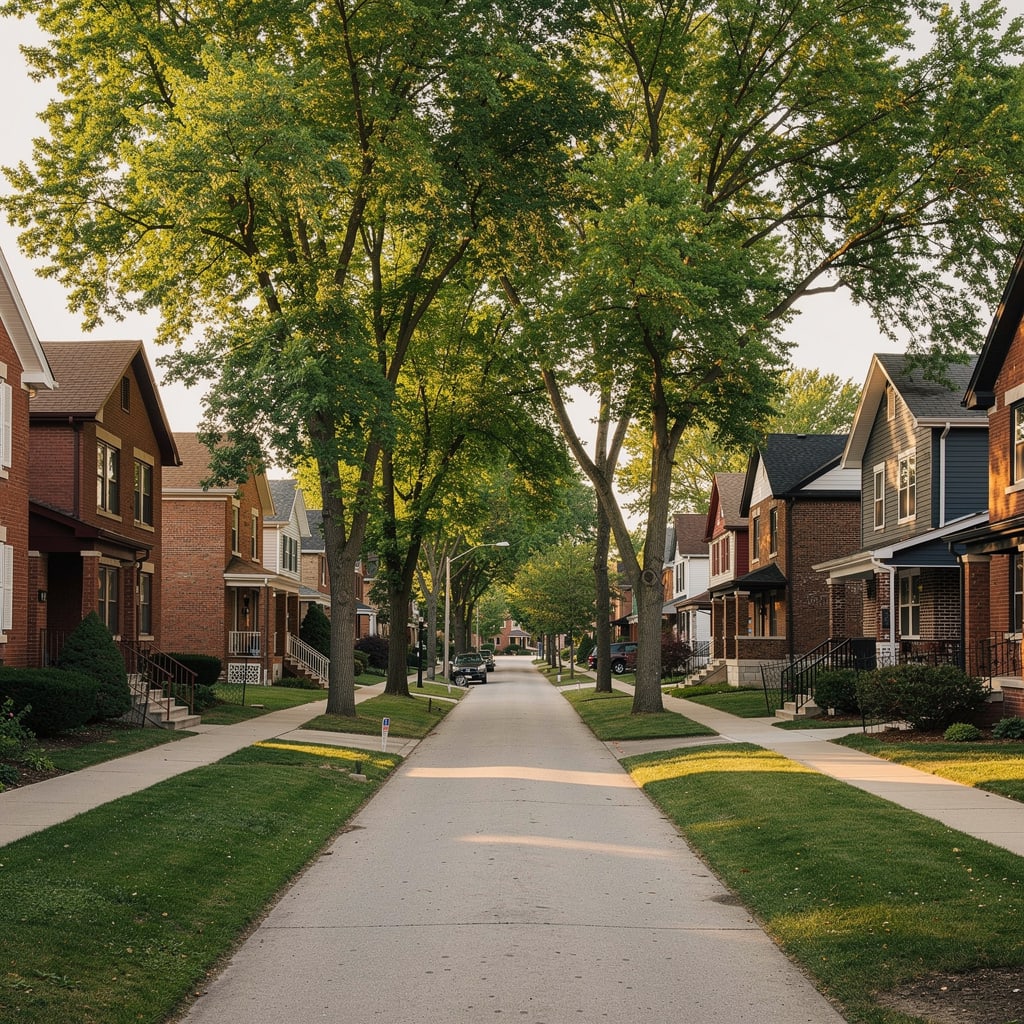
Buyers often describe their ideal location in emotional terms—quiet, charming, walkable, safe—and those feelings usually come down to very practical details. Some streets are effectively cut-through routes between major avenues, drawing steady car traffic and speeding drivers. Others are calmer, with natural slowdowns, speed bumps, or one-way patterns that discourage rush-hour shortcuts.
Tree canopy is another underestimated value driver. A shady, leafy street instantly feels more established, more residential, and more comfortable in Chicago's hot summers. Equally important is what you don't see or hear: the absence of constant sirens, delivery trucks, or late-night bar noise can make a block far more attractive to long-term homeowners, even if it's only a couple hundred feet away from a busier strip.
Pay attention to sidewalks and lighting too. Well-maintained sidewalks, consistent streetlights, and tended parkways suggest engaged owners and a city that's investing in the area. Over time, these quality-of-life details tend to support stronger resale values because they're exactly what future buyers will react to the moment they step out of the car.
2. Housing Stock Consistency and Curb Appeal
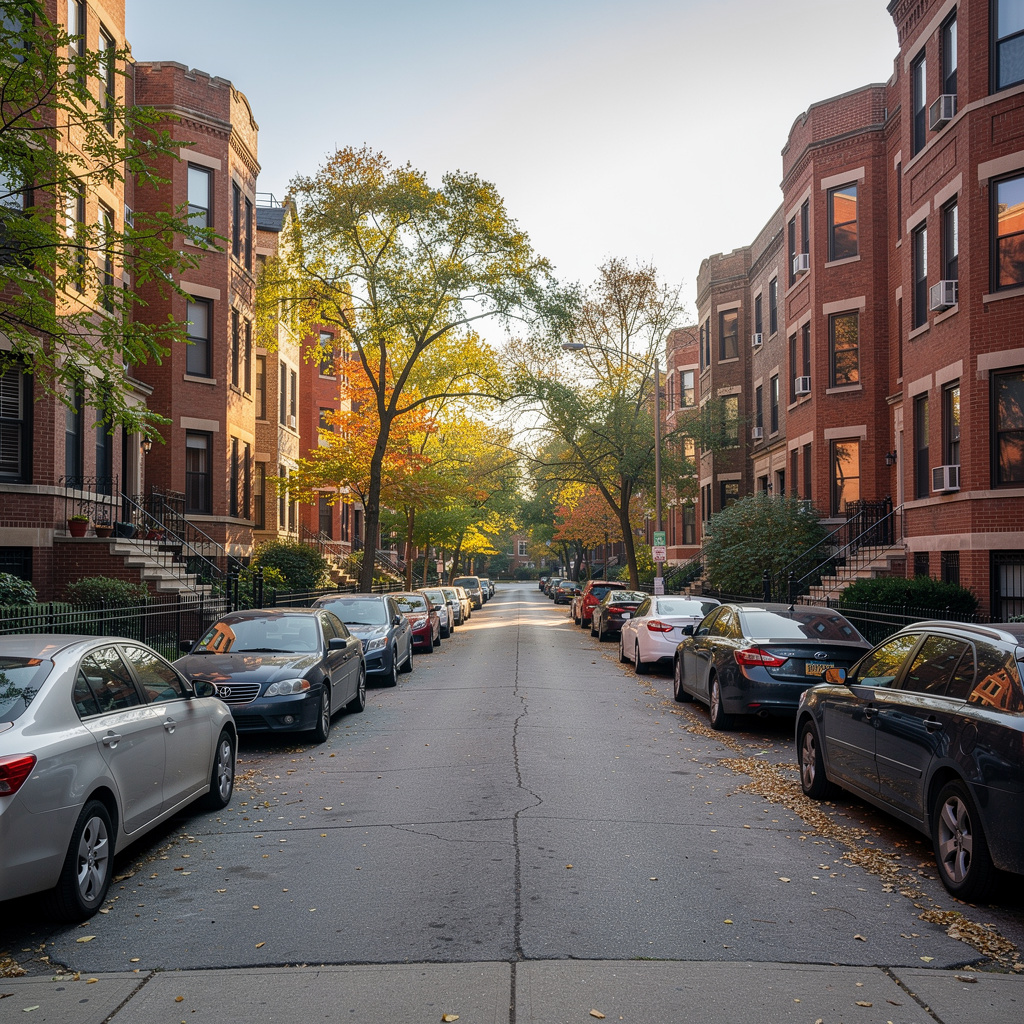
On any given Chicago block you might see a patchwork of older frame homes, vintage brick two-flats, new construction single-families, and a mid-century walk-up or two. Variety can be great, but extreme inconsistency sometimes signals unstable demand. Blocks where most buildings are of similar scale, age, and general quality often hold value better because buyers know what to expect and appraisers can more easily support prices with nearby comparable sales.
Look at the "face" of the block: front yards, fences, porches, steps, and façades. Are lawns cared for, railings painted, and front doors updated—or do several properties show deferred maintenance? A handful of neglected exteriors can drag down the overall first impression, while a street where most owners keep things tidy tends to attract other like-minded buyers who will invest and stay.
Consistency doesn't mean everything must be brand-new or luxury. Even modest vintage buildings with original character, if well maintained, can deliver strong long-term value. The key is a sense of cohesion: similar heights, similar setbacks from the sidewalk, and a rhythm of stoops, trees, and façades that feel intentional rather than haphazard.
3. Proximity Without Pressure: Smart Location Trade-Offs
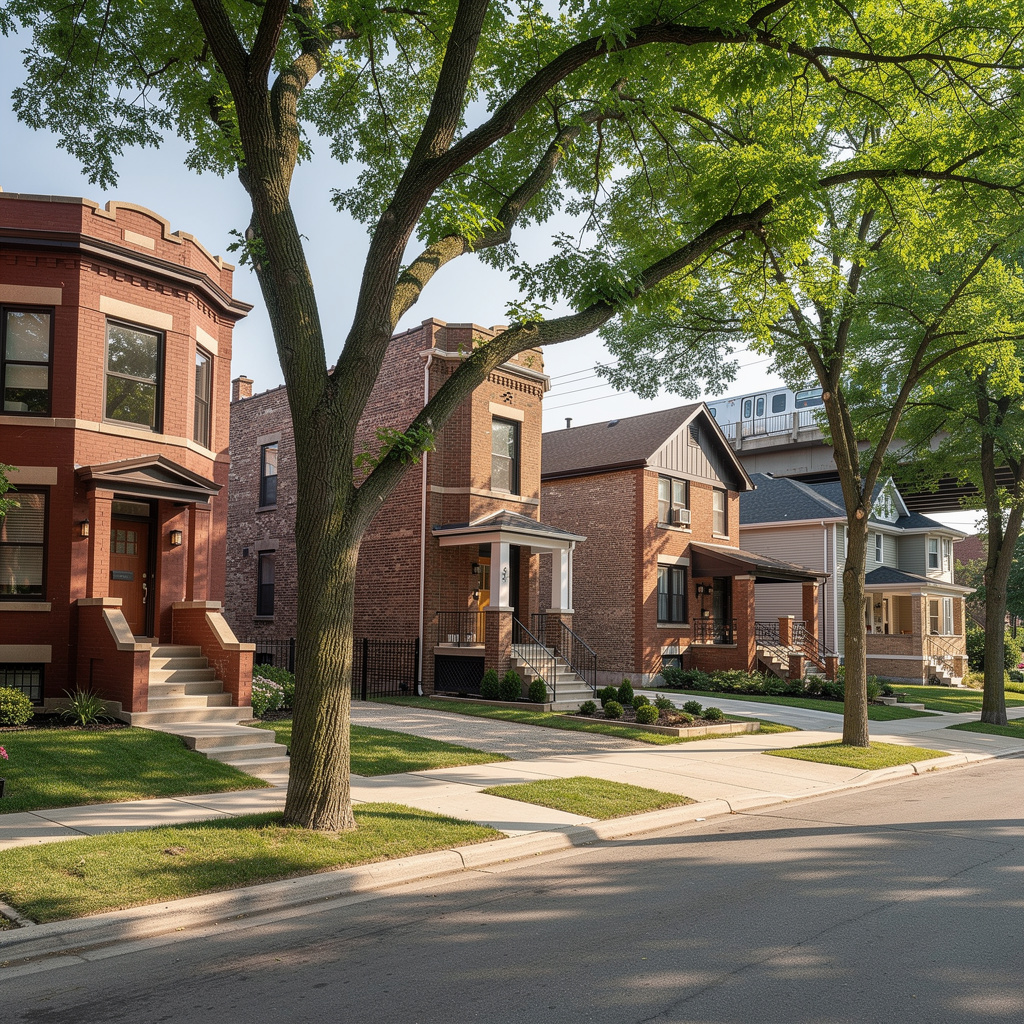
Another subtle advantage belongs to blocks that sit just off the busiest amenities. Being within a short walk of a train stop, a popular park, or a lively commercial corridor can boost demand—yet being on the busiest corner can sometimes create noise, parking headaches, and foot traffic right in front of your door. Homes that are one or two blocks removed often enjoy the best of both worlds: walkability without constant commotion.
The same principle applies to major roads and intersections. A house that backs directly onto a heavily traveled street may sell at a discount compared to one only a few doors in, simply because of perceived noise and safety. Over time, that discount can widen as buyers have more options and become even more selective about micro-locations.
Transit access also plays into resilience. Blocks that are walking distance to an 'L' stop or frequent bus line tend to weather market downturns better because they appeal to a broader pool of buyers and renters. As working patterns evolve, the ability to reach both downtown Chicago, Illinois, USA and neighborhood hubs without a car remains a powerful value anchor.
4. Local Investment, Schools, and Community Stability
Strong-value blocks are rarely isolated success stories; they usually sit in the path of ongoing investment. That might be a recently renovated neighborhood park, a new mixed-use development, or infrastructure improvements like upgraded sewers or bike lanes. When you see construction cranes and scaffolding popping up steadily—but not chaotically—around a given cluster of streets, it often points to growing confidence in the area.
Schools are another major driver of block-level performance. In many parts of Chicago, homes within a highly rated school attendance boundary can command a premium over similar properties just outside the lines. But even within that boundary, some blocks will prove more desirable due to quieter streets, larger lots, or better access to drop-off routes. Families thinking long-term often compete hardest for these pockets, giving them an extra layer of price support.
Community stability also shows up in small clues: long-time residents chatting on stoops, regular neighborhood cleanups, or block clubs that coordinate events and safety efforts. These patterns foster a sense of belonging that's difficult to quantify but easy to feel. Over years and decades, that feeling tends to translate into fewer distress sales, more owner-occupancy, and a more consistent baseline for property values.
5. Market Data at the Block Level: Reading the Tea Leaves
Numbers eventually tell the story. When you strip out the noise and zoom into a specific cluster of addresses, you can measure which blocks are outperforming. Look for streets where sale prices per square foot have risen faster than the broader neighborhood, where time on market is consistently shorter, or where there are more multiple-offer situations even in slower seasons.
It's also helpful to track the ratio of owner-occupants to investors, and how that mix has changed. Blocks that suddenly see a rush of investor purchases at discounted prices may be in transition, which can mean opportunity or risk depending on the direction of that shift. Conversely, areas where renters eventually become buyers on the same block often reflect deep confidence in the immediate surroundings.
This is where a full-time agent who specializes in both traditional sales and more complex situations, like short sales, can provide context. Someone who's in the market every day can tell you whether a recent low sale was a one-off distressed transaction or a meaningful sign that demand is weakening on that stretch of street. That kind of nuance is hard to capture in automated reports but crucial when you're making a large financial decision.
Turning Local Signals into Smart Decisions
Understanding why some Chicago blocks hold their value better isn't about memorizing five magic rules; it's about training your eye to notice the details that matter both emotionally and financially. Street feel, building consistency, walkable-but-quiet locations, evidence of steady investment, and data-backed performance all work together to separate the merely "okay" blocks from the truly resilient ones.
When you pair those observations with up-to-the-minute market insight from a responsive, full-time professional, you gain a real advantage. Instead of hoping you bought on the "right" block, you can confidently explain to yourself—and to the next buyer—exactly why that street stands out and why it's likely to stay in demand.
If you're thinking about buying or selling in Chicago and want help reading these hyper-local signals, working with an agent like Adam W. Smolen at RE/MAX All Star can give you the clarity and responsiveness you need. From first showings through closing—whether it's a straightforward sale or a more complex short-sale situation—having a local expert in your corner can turn what feels like guesswork into a clear, data-informed strategy.